
The Shelf-Life Shortfall Index | What short shelf life costs UK food producers | PackSealer
The Shelf-Life Shortfall Index
Over half the food UK producers throw away never had to go.
UK food manufacturing bins 13% of the nation's food waste. WRAP finds most of it is avoidable.
UK food manufacturing throws away 13% of the nation's 10.2 million tonnes of annual food waste, and WRAP finds most of it is avoidable (2025). A lot of that loss is shelf life, lost to the wrong packaging. Here is the data, by method, by food type, with the sources. No sign-up.
By Oliver Gilbert, Owner, PackSealer (TMEC UK Ltd). Last updated 29th June 2026.
What the shortfall actually is
Shelf-life shortfall is the gap between the shelf life you could get and the shelf life you actually get. Close that gap and you keep stock you are currently throwing away, marking down, or watching get rejected on a short code.
It shows up as money in four places: product binned before it sells, stock marked down to shift it near the code date, orders rejected by a buyer who wants more days on the date, and returns. None of that is consumer guilt about food waste. It's your margin, leaving on a pallet.
The lever most producers underuse is the packaging method, the atmosphere sealed inside the pack. The tables below show how much shelf life each method buys, by food type, and every figure is sourced.
What the waste is worth
Tonnes are easy to ignore. Money is harder. WRAP puts a price on UK food waste, and for the part that could have been eaten, it isn't small.
The edible food thrown away after the farm gate in the UK was worth over £22.3 billion a year (WRAP, 2025). Food manufacturing's own slice of that came to around £0.85 billion: 706,000 tonnes of good food, binned (2021 prices).
Most of what is wasted after the farm gate, nearly three-quarters of it, is food that could have been eaten. That is sellable product. For a manufacturer, food waste already runs at roughly 3.8% of everything handled, before a short shelf life piles on markdowns and rejected loads.
Not all of that is a packaging problem. But the part that is, the stock that died early because the pack did nothing to slow it down, is the part this page is about.
A heat seal closes the bag. It does not extend shelf life.
This is the part most packaging copy skips, so we will say it plainly. Sealing food in ordinary air does almost nothing for shelf life. The pack keeps the dirt out and the moisture in, but the food spoils on roughly the same clock as if it were uncovered.
The proof is in the trials. In one chilled-cheese study, cheese sealed in a normal air-filled pack lasted 9 days. The same cheese, vacuum-packed or gas-flushed, lasted at least 18 (Barukčić et al., 2020). Same fridge, same cheese, double the life. The only difference was the air.
So if you run fresh product through a basic impulse or heat sealer and wonder why it still goes off fast, that's why. The shelf-life gain comes from taking the air out (vacuum) or swapping it for carbon dioxide and nitrogen (gas-flush, or MAP), not from the seal. An impulse sealer is the right tool for plenty of jobs. Extending the shelf life of fresh food isn't one of them.
Shelf life by packaging method, by food type
| Food type | Sealed in air (baseline) | Vacuum packed | Gas-flush / MAP | Source |
|---|---|---|---|---|
| Fresh red meat (beef, lamb, pork cuts)indicative | 2-4 days | 7-21 days (UK cap 13) | 4-12 days (UK cap 13) | Ranges indicative; the binding figure is the UK 13-day chilled VP/MAP cap (FSA/FSS). Beef low-O2/high-CO2 MAP: Luño et al. (2000) |
| Cooked & cured meats (sliced ham)indicative | ~6 days | ~10-21 days | ~21 days (50/50 N2/CO2) | MAP 21d (50/50 N2/CO2): Air Liquide; air & vacuum indicative |
| Fresh cheese (soft) | 9 days | ≥18 days | ≥18 days | Barukčić et al. (2020) |
| Pressed / hard cheese | 1-2 weeks | Weeks to months | ~3-6 months (80/20 N2/CO2) | Air Liquide MAP guide |
| Bread & bakery (sliced) | 6-10 days | Not typical (crushes crumb) | Up to ~3 weeks | BAKERpedia; Rodriguez et al. (+117-195%) |
| Ground coffee | Stales fast | ~5x slower staling | Up to ~20x slower at very low O2 (~0.5%) | Nicoli 1993; Nicoli et al. 2009 |
| Bagged salad / fresh produceindicative | 2-5 days | Not used (crushes) | ~6-9 days | MAP ~6-9d: Air Liquide (prepared veg); air baseline indicative |
| Chilled ready meals | 2-5 days | Not typical | 5-10 days | KBT MAP guidance; cook-chill 5-day rule |
| Fresh fishindicative | Very short | Extends, product-specific | Extends with chill, validate per product | MAP of fish review (indicative) |
Indicative chilled or ambient ranges under good hygiene and correct storage. Real shelf life must be set by your own validated trials, not copied from a table. UK chilled vacuum and gas-flush food is capped at a default 10-day life (13 days for fresh beef, lamb and pork) unless extra controls are validated, see Date labels and the safety cap below.
What the air is costing you
Chilled shelf life, sealed in air vs gas-flush, for four common lines. Indicative ranges; the cheese figures are from a peer-reviewed trial.
What we see in the workshop
We have sold, serviced and repaired sealing machines from one Solihull workshop since 2001, so we get a close view of where shelf life actually leaks away. It is rarely the machine. Almost always, it is a mismatch between the machine, the method and the product.
The thing we see most often is a producer running fresh, short-life product through an impulse or heat sealer and expecting the pack to buy them days. It won't. A sealed bag of air spoils on roughly the same clock as an open one. When a line needs more shelf life, the lever is the atmosphere inside the pack, vacuum or gas-flush. The seal itself buys you nothing.
The other patterns are just as common, and just as fixable:
- ▸Buying on price, not on duty cycle. A light machine put on a heavy line burns out, and the downtime costs more than the machine ever saved.
- ▸Gas-flushing without validating the gas mix or the chill chain, then printing a date that was never actually proven.
- ▸Over-specifying. Paying for a chamber vacuum machine when the product and the volume only ever needed a good impulse sealer.
- ▸Treating the seal as the shelf-life step. The seal keeps the pack shut. The atmosphere inside it does the work.
None of this is complicated, but it is rarely written down anywhere a producer can find it. That is the whole reason for this page. If you're not sure which side of the line your product sits on, the two-minute diagnostic below will point you at the right method, or you can just call the workshop.
Date labels and the safety cap
Close your own shelf-life gap
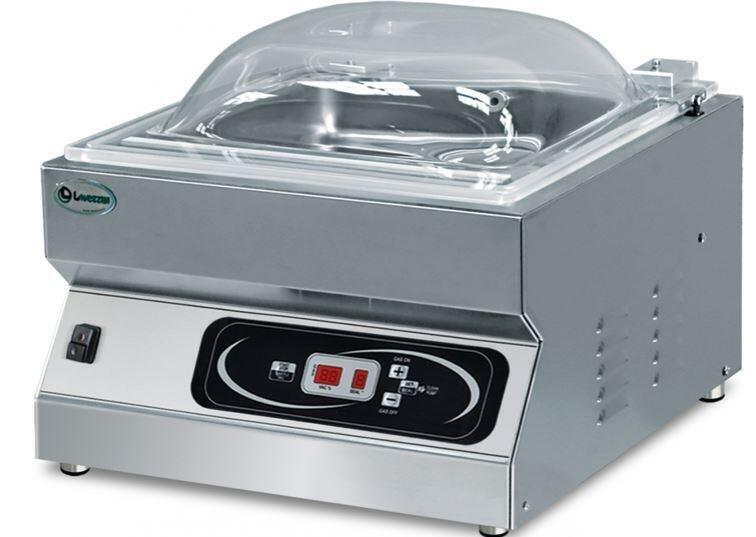
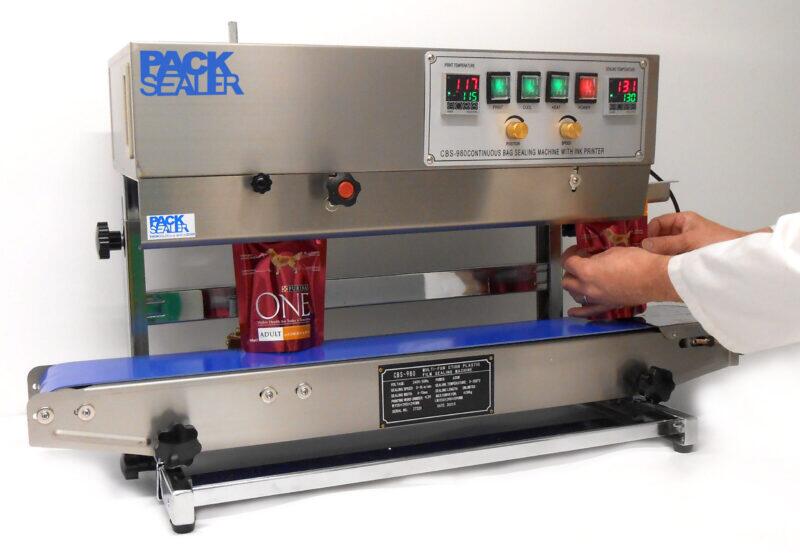
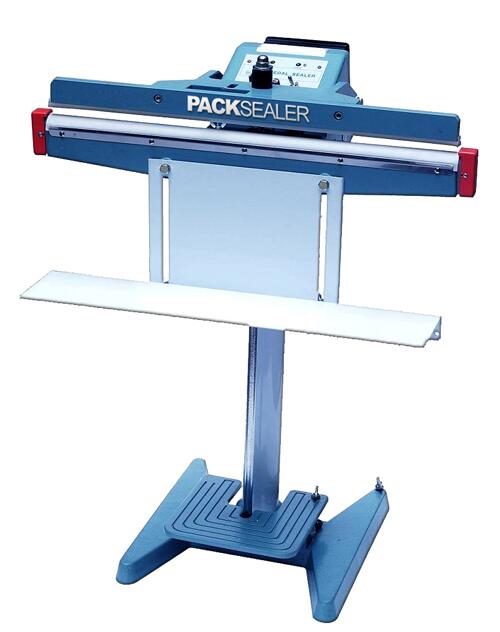
If the tables say your line is leaving shelf life on the table, here is where to look. We sell, stock, service and repair every machine below from our Solihull workshop.
Your numbers, not ours
The Shelf-Life Shortfall calculator
Put your own figures in. This sizes what short shelf life could be costing your line, in your numbers, to start a conversation. It is a scale-of-the-problem estimate, not a measurement of your line, and not a promise of savings.
Starts at the UK food-manufacturing average, 3.8% by mass (WRAP). That is a national figure, not a measurement of your line. If you know your own waste rate, type it in.
This one is yours. We will not print a guaranteed savings number: anyone who promises an exact recovery percentage without auditing your actual line is guessing. Set what you honestly believe is recoverable, even if it is low.
At stake as waste each year
annual value x the waste rate you set (a national average, not your line)
Potentially recoverable
the waste pool x your own recoverable estimate
Annual value through this line
your weekly units x unit value x 52 weeks
Enter your weekly units and unit value to see the figures.
Want this as a one-page breakdown?
We will email it to you. One email restating your own figures, nothing else. Your result stays on screen either way.
We use your email to send this one breakdown and nothing else. No marketing list. Privacy policy.
Every figure here is your own input, simple arithmetic, or a national average you can change. Nothing on this calculator is a measurement of your line or a guarantee of savings. Real shelf life and real savings come from your own validated trials and the right machine for your product.
Want your real number?
We cannot give you an honest recoverable figure from a web form, it depends on your product, your line and your cold chain. That is a five-minute conversation with the workshop, not a slider.
How we compiled this
The national waste figures are WRAP's published estimates and the food-safety limits are FSA and Food Standards Scotland guidance, all linked below. The shelf-life-by-method ranges are indicative, drawn from peer-reviewed studies and packaging-industry technical data and refined against them, never absolutes.
We deal in indicative ranges, never absolutes, because real shelf life depends on your product, your hygiene and your cold chain. Nothing here replaces your own validated shelf-life trials. Where a figure rests on a single study or trade source rather than a national dataset, we say so. If you spot something we should sharpen, tell us.
Who compiled this

Oliver Gilbert
Owner, PackSealer (TMEC UK Ltd)
Oliver Gilbert runs PackSealer, the UK heat-sealing specialist that has sold, serviced and repaired sealing machines from its Solihull workshop since 2001. He compiled this Index from public WRAP and FSA data, peer-reviewed shelf-life studies and the workshop's own test experience, to give UK food producers one honest, sourced place to see what their packaging method is doing to their shelf life.
Sources
The national figures and the headline studies below are public or peer-reviewed and linked so you can check them. The by-method ranges are indicative industry figures, refined against these sources and your own validated trials, never absolutes.
- WRAP, UK Food Waste & Food Surplus, UK Key Facts (July 2025). Open-access.
- WRAP, Quantification of Food Surplus, Waste and Related Materials in the Supply Chain.
- WRAP, Household Food and Drink Waste in the UK 2022.
- FSA, use-by and best-before date guidance.
- FSA / Food Standards Scotland, safety and shelf-life of vacuum and MAP chilled foods with respect to non-proteolytic C. botulinum (ACMSF).
- Luño et al., beef shelf life in low-O2 / high-CO2 atmospheres with low CO (Meat Science, 2000).
- Barukčić et al., shelf life of fresh cheese under vacuum and MAP at 4C (J Food Sci Technol, 2020).
- Rodriguez et al., modified-atmosphere packaging of sliced bread (Nahrung, 2000).
- Air Liquide, modified atmosphere packaging service-life guide.
- BAKERpedia, bakery shelf-life and packaging.
- KBT, MAP of ready meals and cook-chill products.
- DeWitt & Oliveira, modified-atmosphere packaging of fish and fishery products (review, Foods, 2016).
- Nicoli, Calligaris & Manzocco (2009), shelf-life testing of coffee and related products (Food Engineering Reviews); and Nicoli et al. (1993) on vacuum staling.
Built by PackSealer, the UK heat-sealing specialist. Selling, fixing and testing sealing machines from Solihull since 2001.This page is a free reference. Figures are indicative ranges from public and peer-reviewed sources and are not a guarantee of shelf life for any specific product. Always set date codes from your own validated shelf-life trials and follow FSA/FSS guidance.