
GMP Cleanrooms UK | Grade A to D & Annex 1 | PackSealer
GMP cleanrooms UK
A GMP cleanroom is the graded, monitored environment that lets a manufacturer meet Good Manufacturing Practice for medicines, biologics, and medical devices. In the UK the MHRA enforces it through EU GMP Annex 1, which sets four grades, A to D, each mapped to an ISO 14644-1 class. PackSealer supplies Monmouth Scientific modular cleanrooms, designed and built in the UK, validated to ISO 14644-1 and engineered to support Annex 1. Grade C and D kits from £17,560, or scoped to a multi-grade facility.
What a GMP cleanroom is
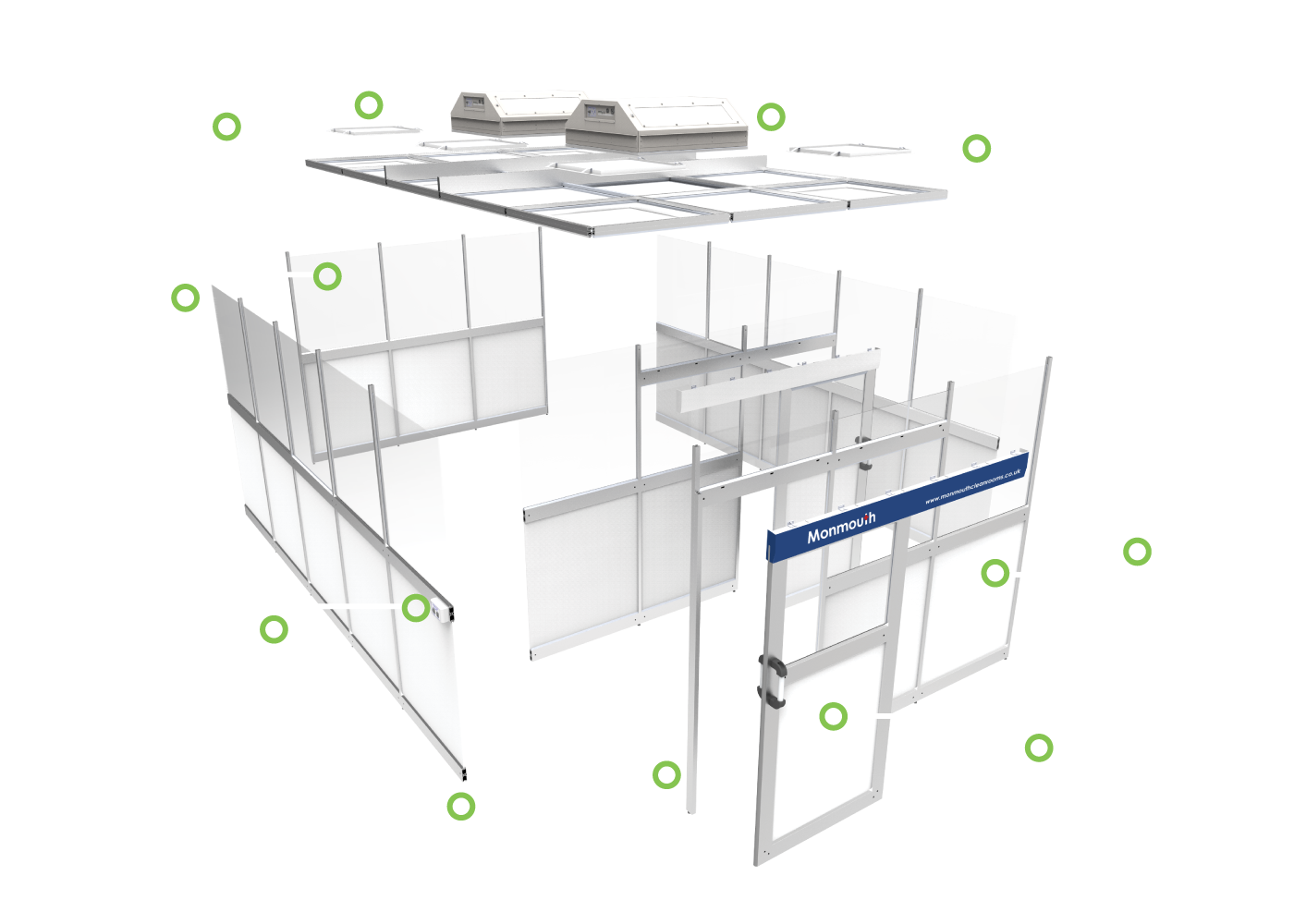
GMP, Good Manufacturing Practice, is the quality framework a medicines or medical-device manufacturer has to work inside. A GMP cleanroom is the part of that framework you can build: the graded, monitored environment where the product is made. In the UK the MHRA enforces GMP through the Orange Guide, which adopts EU GMP Annex 1. The cleanroom is one input to compliance. The procedures, monitoring, and trained people around it carry the rest.
A GMP grade is stricter than a plain ISO class in two ways. It is measured in two states, at rest and in operation, so the room has to hold its grade with people and process running, not just sitting empty. And it sets microbial limits as well as particle counts, because in pharmaceutical and biologic work the living contamination matters as much as the dust.
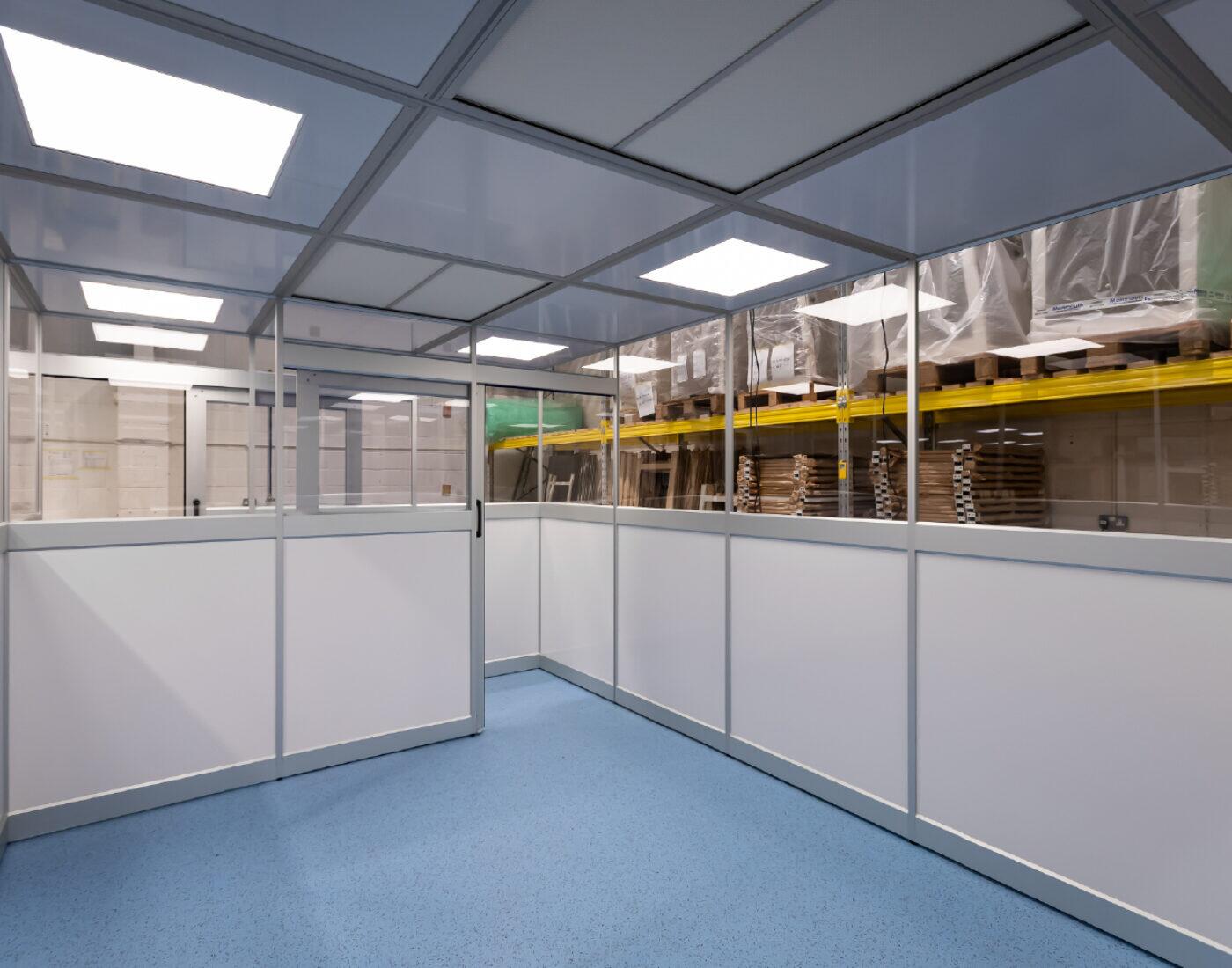
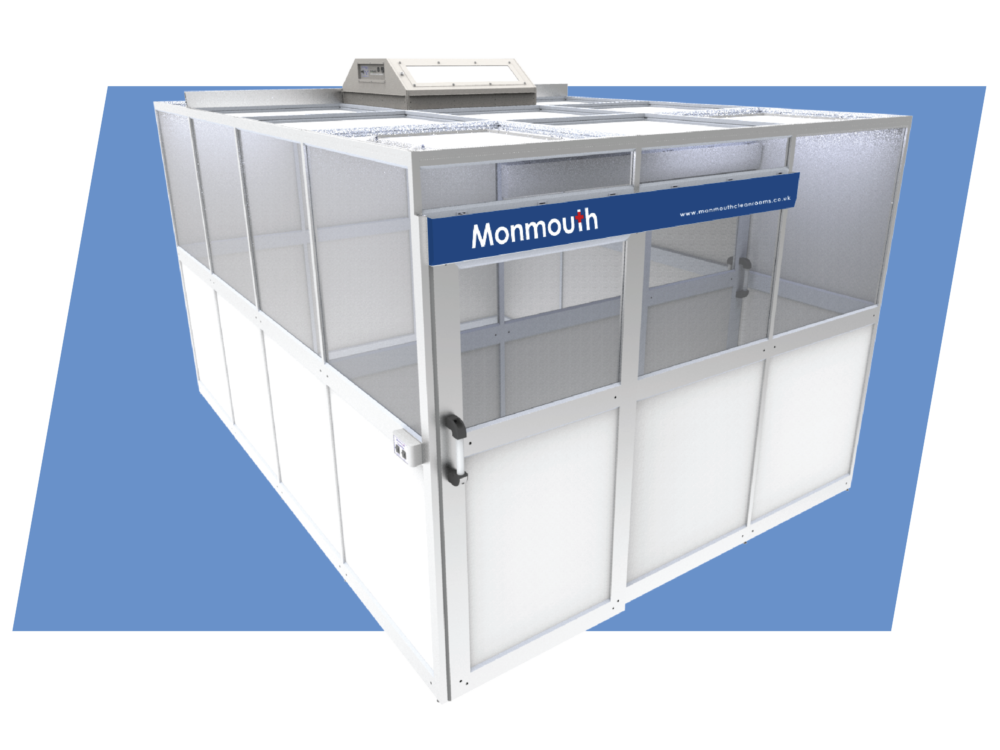
Four grades cover it, A to D. Grade A is the critical zone where product is exposed. Grade D is the least critical support area. Most regulated production sits at Grade C or D, classified ISO 7 or ISO 8 in operation, which is the envelope a Monmouth modular cleanroom is built to deliver: H14 HEPA filtration, cleanable coved panels, a pressure cascade, and continuous monitoring points.
Who specifies one, and what triggers it
Quality and regulatory leads drive the GMP cleanroom decision, with facilities teams alongside. Pharmaceutical and biologic manufacturers, ATMP developers, medical-device makers under ISO 13485, and the contract manufacturers who serve them. The common thread is simple: an inspector or a client auditor will walk the floor and expect documented control.
The trigger is almost always regulatory. An MHRA inspection flags an environmental finding. A client audit needs Annex 1 alignment before a contract clears. A new product needs a qualified suite before commercial supply. When the constraint is the grade and the clock, a modular build is the fast route. It gets you to a validated envelope in weeks, against the year a fitted-out facility takes, with the IQ/OQ documentation built in.
Monmouth delivered the UK's largest modular cleanroom to date for ADDEV Materials Parafix, a 500m² build zoned across ISO 7 and ISO 8 for medical-grade adhesive converting in regulated healthcare supply. Fifteen zones, airlocks, gowning, and material transfer. The case study is on file; ask for it on your scoping call.
The four GMP grades, and the ISO classes they map to
This is the table every GMP cleanroom decision starts from. Each grade is defined by a particle limit at rest and in operation, mapped to ISO 14644-1, with a microbial action limit on top.
| GMP grade | ISO class (at rest / in operation) | Typical GMP use | How Monmouth delivers it |
|---|---|---|---|
| Grade A | ISO 5 / ISO 5 | Aseptic fill point, critical exposed-product zone | Circulaire laminar flow unit or isolator inside a Grade B suite |
| Grade B | ISO 5 / ISO 7 | Background to a Grade A aseptic core | Modular suite with elevated air change rate plus localised laminar flow |
| Grade C | ISO 7 / ISO 8 | Solution prep, non-sterile and terminal manufacturing | Monmouth Cleanroom Kit, standard build |
| Grade D | ISO 8 / not defined | Component prep, support and gowning areas | Monmouth Cleanroom Kit, standard build |
In numbers, from Annex 1: Grade A and Grade B both hold ISO 5 at rest, and Grade A permits effectively no microbial growth, with an air action limit under 1 CFU per cubic metre. A Grade C cleanroom is ISO 7 at rest and ISO 8 in operation, with a 100 CFU per cubic metre air action limit. A Grade D cleanroom is ISO 8 at rest, capped at 3,520,000 particles of 0.5 micron or larger per cubic metre. The grades you will build most often are C and D.
What Annex 1 (2022) changed, and why it matters
GMP Annex 1 was revised in 2022 and came into force in August 2023, the first full rewrite since 2008. If your last cleanroom was specified before that, the rules you built to have moved. Three changes matter for the room itself.
First, the Contamination Control Strategy. Annex 1 now expects a single documented strategy that ties every control together, the room, the gowning, the monitoring, the procedures, into one defensible whole. The cleanroom is the physical evidence that strategy points to.
Second, continuous monitoring. Grade A and Grade B zones are expected to run continuous airborne particle monitoring throughout operation, where periodic spot checks once sufficed. Build the monitoring points and data ports in from the start and you avoid cutting them into a qualified room later.
Third, Quality Risk Management runs through all of it. The grade you choose, the recovery time you prove, the alert and action limits you set, each is justified against the risk to the product. We design Monmouth suites with the monitoring provision, pressure cascade, and recovery performance that make that justification straightforward to document.
What GMP asks of the room, and where the modular kit fits
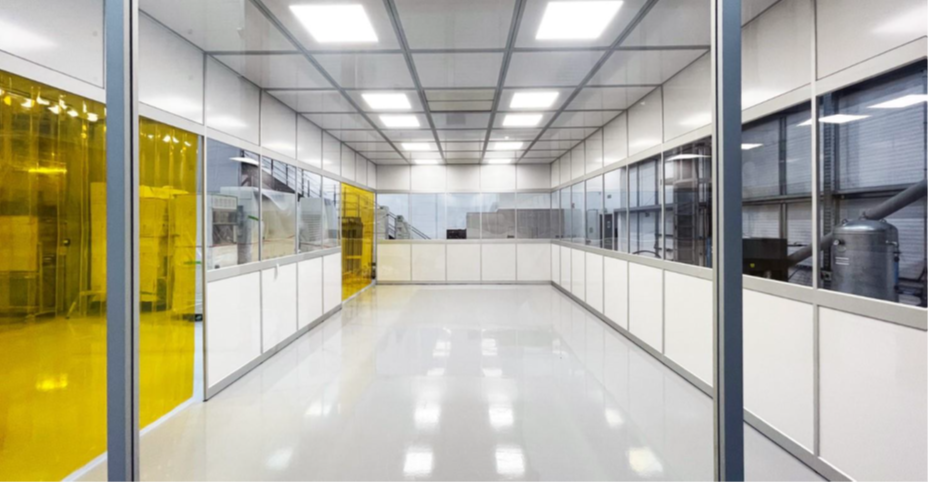
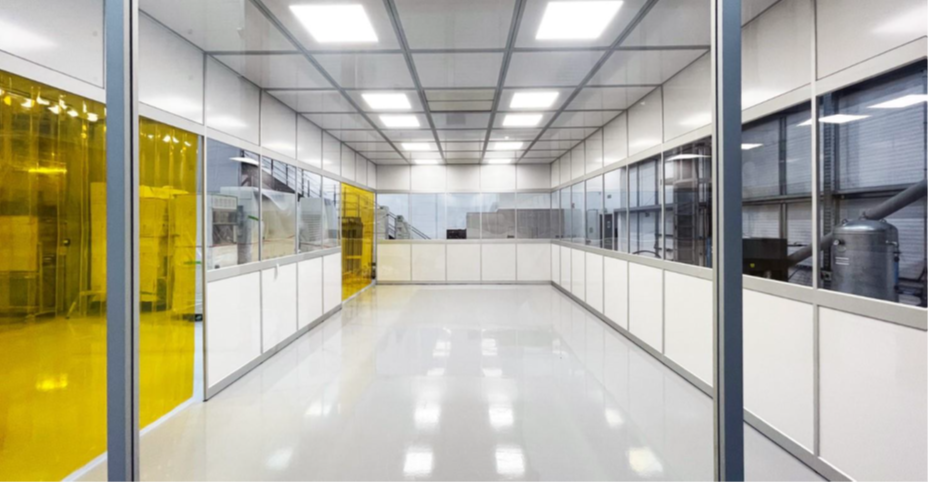
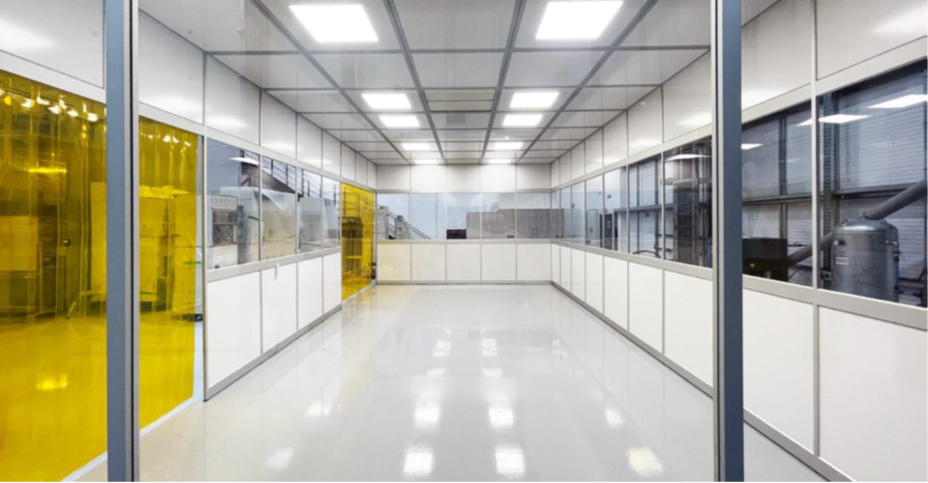
Annex 1 is specific about the physical room. Surfaces must be smooth, impervious, unbroken, and easy to clean, so contamination cannot settle and disinfectant cannot degrade them. Internal corners are coved, radiused rather than square, so there is nowhere for residue to lodge. Lighting and services sit flush. Air is H14 HEPA filtered, with a pressure cascade between grades so air always moves from cleaner to less clean. A Monmouth modular cleanroom is built to all of this as standard: vinyl-clad or coated steel panels, coved junctions, flush LED, gasketed doors, and a documented pressure regime.
Here is the straight answer on grade, because it changes what you buy. A Monmouth Cleanroom Kit gives you a Grade C or D environment, classified ISO 7 or ISO 8, ready to validate. That covers most regulated floor space: prep, compounding, packing, and support. What a modular envelope alone does not give you is a Grade A aseptic core. Grade A needs unidirectional airflow at around 0.45m/s over the critical zone, from a laminar flow unit or an isolator sited inside a Grade B background. Monmouth supply both the envelope and the Circulaire laminar flow units that create the Grade A zone, so the critical area and its background are designed together. Tell us the grade and we will tell you the build.
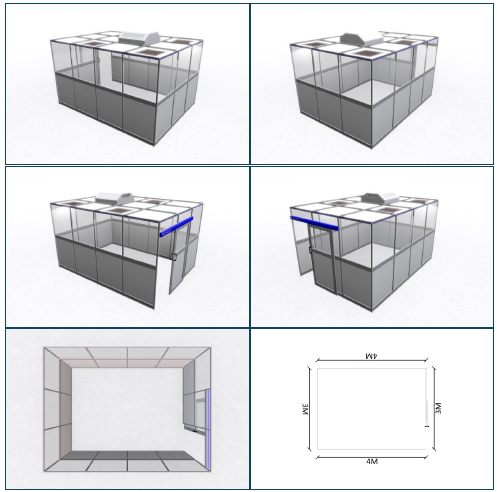
Monmouth cleanroom kits for GMP Grade C and D
Facility-scale GMP suite, scoped to grade
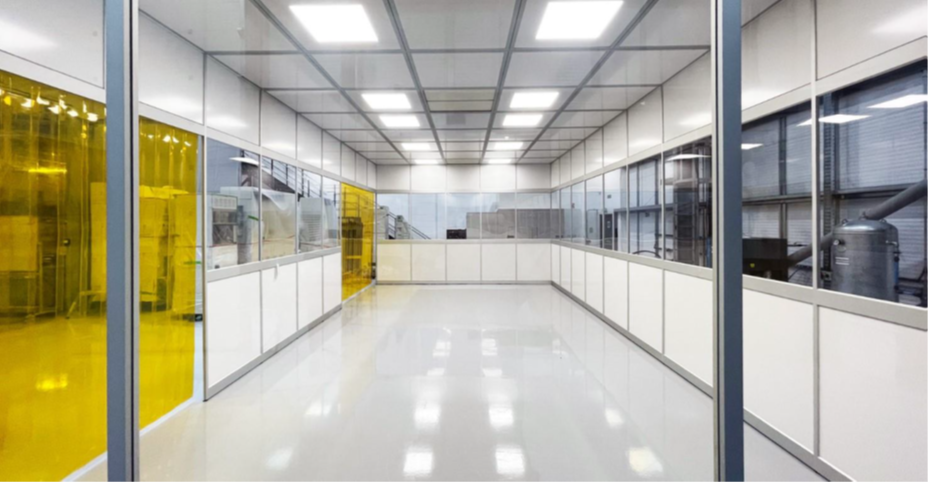
Multi-grade builds, Grade A aseptic cores with laminar flow or isolators, material transfer airlocks, integrated HVAC, and a pressure cascade across grades. Engineered to your process and floor plan, validated to ISO 14644-1, with IQ/OQ documentation and continuous-monitoring provision built in. Lead times typically 8 to 14 weeks depending on scope. Send us your scope and we will quote within a working week.
Request a scoping call →Related cleanroom pages
Scope a GMP cleanroom for your facility
Tell us the GMP grade you need and the floor area you're working with. We'll come back with the right Monmouth Cleanroom Kit, or a scoped multi-grade build, within a working week.
Common questions about GMP cleanrooms
A GMP cleanroom is a graded, controlled environment used to manufacture pharmaceuticals, biologics, and medical devices under Good Manufacturing Practice. It is designed to limit airborne particles, microbial contamination, and pyrogens during production. In the UK, the MHRA enforces GMP through EU GMP Annex 1, which defines four grades, A to D.
Grade A is the critical zone for high-risk operations such as aseptic filling. Grade B is the background to a Grade A zone. Grade C and Grade D are cleanrooms for less critical preparation, support, and non-sterile manufacturing. The grade is set by the contamination risk of the operation, under EU GMP Annex 1.
Grade A is ISO 5 at rest and in operation. Grade B is ISO 5 at rest and ISO 7 in operation. Grade C is ISO 7 at rest and ISO 8 in operation. Grade D is ISO 8 at rest, with no defined in-operation limit. GMP grades are measured in both states, at rest and in operation, which is the main difference from a plain ISO 14644-1 classification.
The 2022 revision, in force from August 2023, introduced the Contamination Control Strategy, a single documented strategy linking every contamination control on site. It also expects continuous airborne particle monitoring in Grade A and B zones, and places Quality Risk Management at the centre of cleanroom design and operation. It was the first full rewrite of Annex 1 since 2008.
Annex 1 requires smooth, impervious, cleanable surfaces, coved internal corners, flush lighting and services, H14 HEPA filtration, a pressure cascade between grades, defined gowning, and environmental monitoring. The room must hold its grade in operation, and the controls must be justified within a documented Contamination Control Strategy.
ISO 14644-1 classifies a cleanroom by airborne particle count alone. GMP grades do that and add microbial limits, two measurement states (at rest and in operation), and a quality framework around the room. A room can meet ISO 7 on particle count and still not be GMP compliant if the monitoring, gowning, and documentation are not in place.
They share the same goal under different regulators. In the UK and EU, GMP runs under EU GMP Annex 1, enforced by the MHRA through the Orange Guide, and defines cleanrooms as Grades A to D. In the US, the FDA enforces cGMP under 21 CFR, and its aseptic guidance classifies by ISO 14644 class (ISO 5, 7 and 8) rather than letter grades. A cleanroom built to Annex 1 Grade C or D meets the environmental intent of both, though the documentation and inspection regime differ. PackSealer builds to the UK and EU Annex 1 framework.
A modular envelope alone gives you Grade C or D, classified ISO 7 or ISO 8. Grade A needs unidirectional airflow at around 0.45m/s over the critical zone, from a laminar flow unit or an isolator sited inside a Grade B background. Monmouth supply both the modular suite and the Circulaire laminar flow units that create the Grade A zone, so the critical area and its background are designed together.
A Monmouth Cleanroom Kit at Grade C or D starts at £17,560 ex VAT for 12m² and rises to £24,800 ex VAT for 25m². Multi-grade suites with Grade A laminar flow cores, airlocks, and integrated HVAC are quoted to scope, typically £40,000 to £500,000 depending on size and complexity. Validation and requalification visits run £400 to £795 per visit.
A standard Monmouth Cleanroom Kit ships in 4 to 6 weeks from order and installs in 3 to 5 days on a prepared site. Multi-grade GMP suites run 8 to 14 weeks from order to handover depending on scope. The fastest path is a Grade C or D kit on an existing floor with three-phase power; the longest involve Grade A cores, HVAC integration, or services upgrades.
No. PackSealer supplies Monmouth cleanrooms for purchase only. For short-term project work or interim capacity, ask us about clean tents and flexible clean canopies as a lower-cost option. For permanent GMP-graded capacity, a Cleanroom Kit or a scoped suite is the right route and typically pays back faster than rental over a 12-month horizon.
Not sure which GMP grade your process needs? Our free assessment maps you to a grade and a build in two minutes.
Find My Cleanroom GradeGet a GMP cleanroom quote from PackSealer
Monmouth Scientific modular cleanrooms, graded for GMP. UK-designed, validated to ISO 14644-1, built to support Annex 1, and supplied as Grade C/D kits from £17,560 or scoped as a multi-grade suite with a Grade A core. Send us your floor plan and grade, and we will come back within a working week.
View Cleanroom Range → Or call: 0121 704 0294 (Mon–Fri, 9am–5pm)