
ISO 8 Cleanroom UK | Class 100,000 | Monmouth | PackSealer
ISO 8 cleanroom UK
An ISO 8 cleanroom holds airborne particles to fewer than 3,520,000 per cubic metre at 0.5 microns, in operation. It is the entry class for controlled manufacturing: non-critical pharmaceutical prep, medical device assembly, secondary packaging, and the gowning and support areas around a higher-grade suite. PackSealer supplies Monmouth Scientific modular ISO 8 cleanrooms, designed and built in the UK, validated to ISO 14644-1, shipped as kits from £17,560 or scoped to a multi-zone facility.
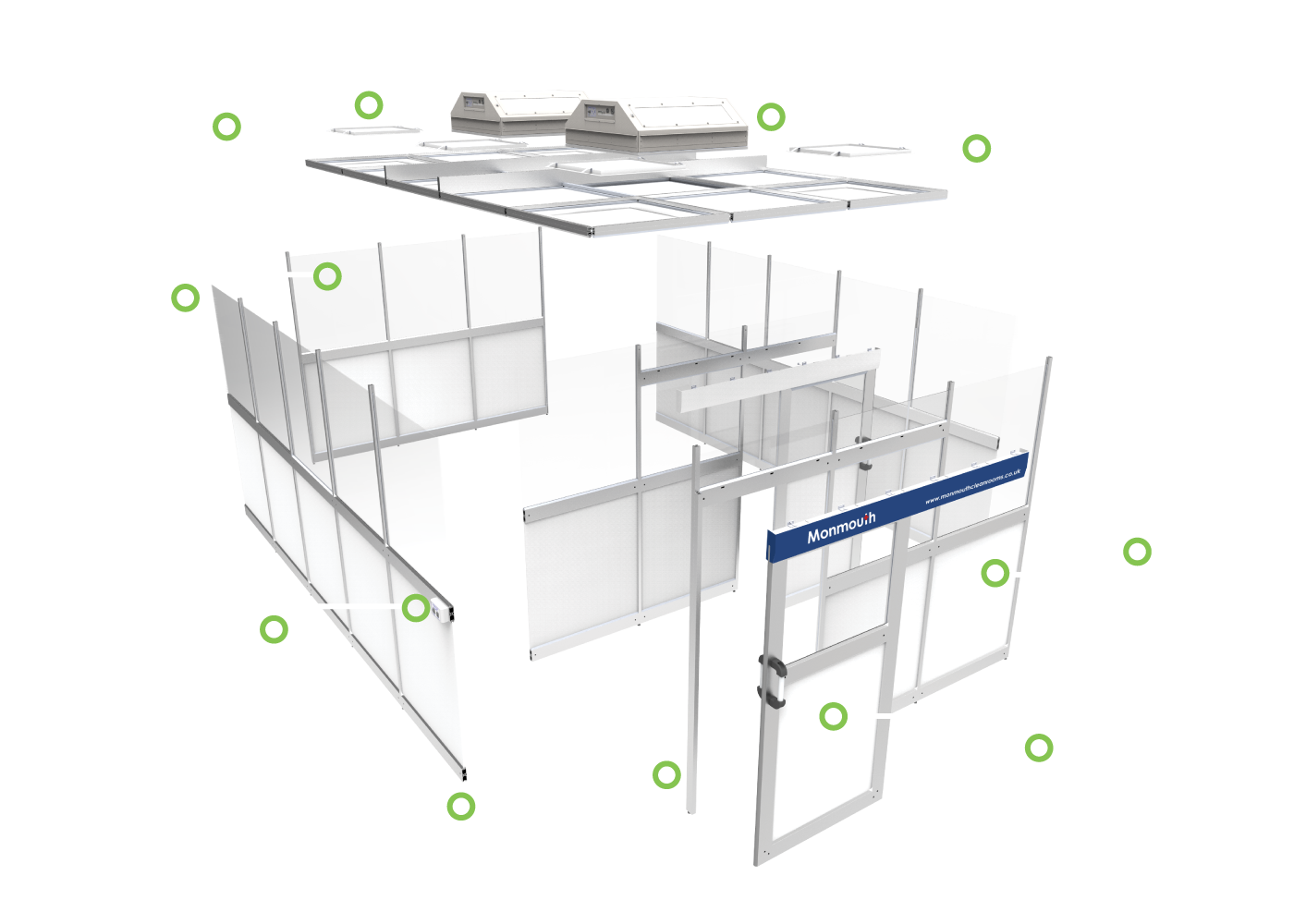
What ISO 8 actually means on the floor
ISO 8 is defined by ISO 14644-1:2015. Maximum 3,520,000 particles ≥0.5 microns per cubic metre, in the operational state, with the room running and people working. That is the class many regulators previously called Class 100,000 under the older Federal Standard 209E.
In practice, ISO 8 is the entry class for controlled manufacturing. Non-critical pharmaceutical preparation, general medical device assembly, secondary and tertiary packaging, component cleaning, and the gowning and material-staging areas that feed a higher-grade suite. It runs at lower air change rates than ISO 7, typically 10 to 25 per hour, which makes it the most cost-effective class to build and to run.
ISO 8 still needs the full envelope: HEPA filtration, a pressure cascade, gowning protocol, and validation evidence. Monmouth Scientific modular cleanrooms deliver it as a complete system: HEPA-filtered ceiling tiles, vinyl-clad or coated steel walls, gasketed doors, and an integrated control panel. The same build as an ISO 7 room, tuned to an ISO 8 target.
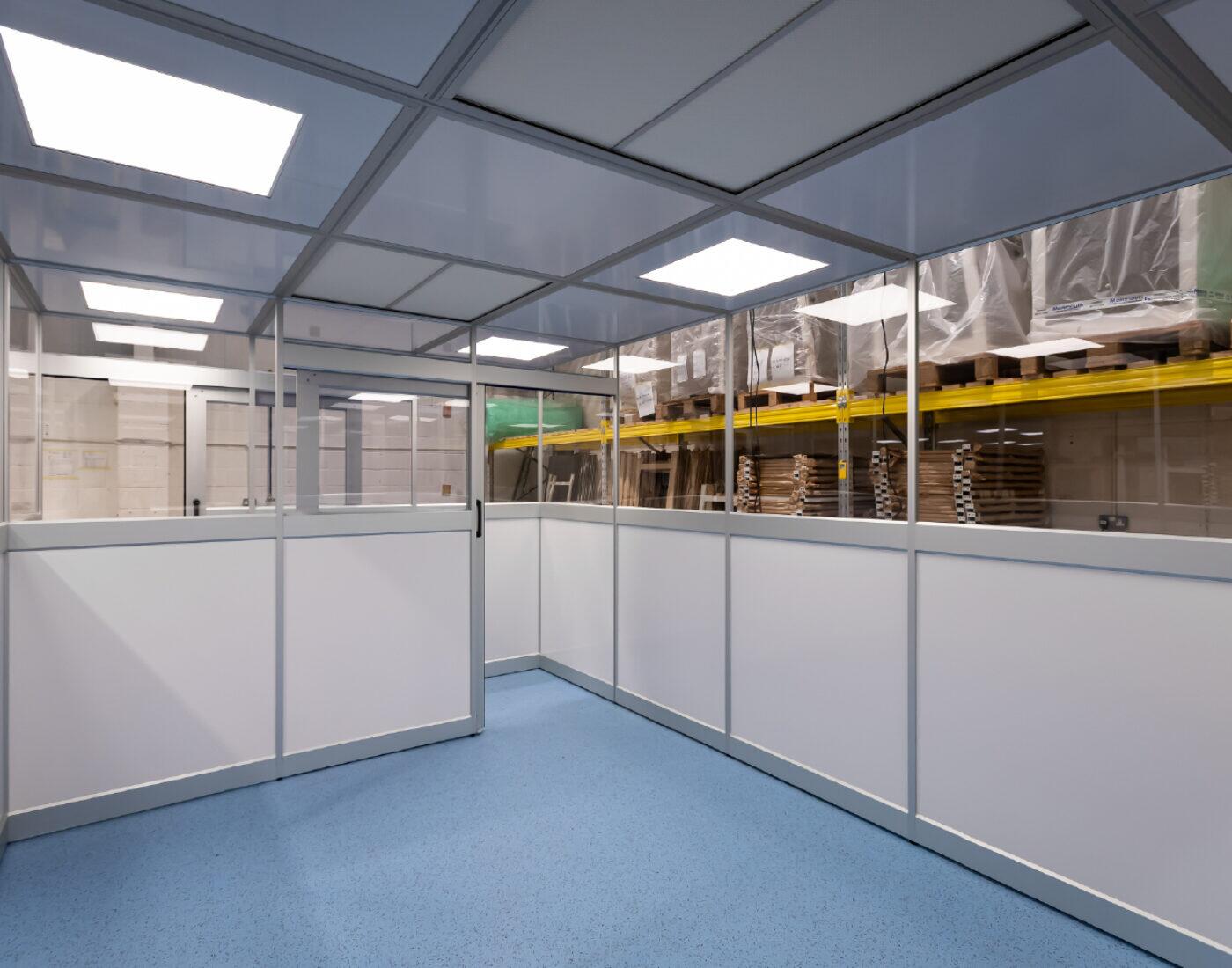
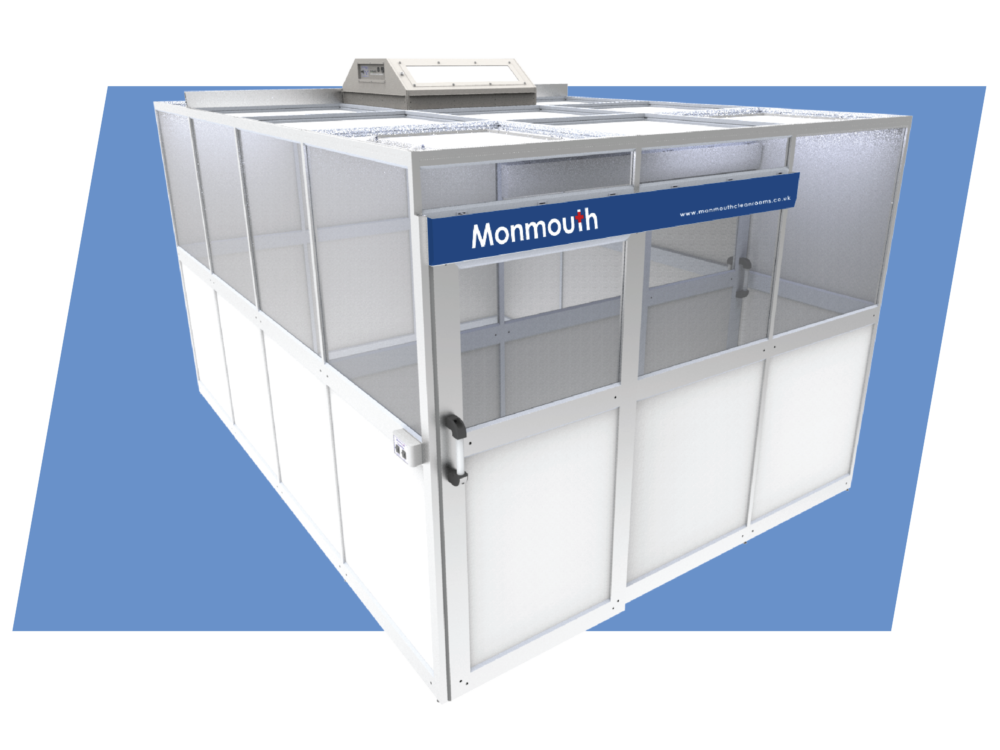
When ISO 8 is the right class, and ISO 7 is over-spec
Most ISO 8 demand comes from work where ISO 7 is more than the process needs. Medical device assembly that isn't sterile-critical. Secondary and tertiary pharmaceutical packaging. Component prep, cleaning, kitting, and inspection. Cosmetics and nutraceutical filling. The gowning rooms, airlocks, and material staging that surround a Grade C or B suite.
The decision is usually about cost control. An ISO 8 room is cheaper to build, uses less energy, and is faster to qualify than ISO 7, because the particle target is ten times more forgiving. If your QA lead can hold the process at Grade D, paying for ISO 7 air change rates spends money on a margin you don't need. We will tell you honestly which class the work calls for.
Monmouth zoned both classes into one facility for ADDEV Materials Parafix, a 500m² build in Lancing that runs ISO 7 and ISO 8 side by side for medical-grade adhesive converting. Mixing classes under one roof is routine: clean where you must, ISO 8 where it is enough. The case study is on file; ask for it on your scoping call.
ISO 8 or ISO 7: how to choose the class
The class is a process decision, and the budget follows it. Here is how the two compare on the things that actually drive the choice.
| Factor | ISO 8 | ISO 7 |
|---|---|---|
| Max particles ≥0.5µm/m³ (in operation) | 3,520,000 | 352,000 |
| Legacy FS 209E name | Class 100,000 | Class 10,000 |
| Typical air changes per hour | 10 to 25 | 25 to 60 |
| EU GMP grade (in operation / at rest) | Grade C / Grade D | Grade B / Grade C |
| Typical use | Non-critical prep, packaging, assembly, gowning, support | Sterile fill, critical assembly, composite layup |
| Relative build and running cost | Lower | Higher (more filtration, more air changes) |
The envelope is the same Monmouth panel system either way. The difference is in the air handling, the filtration coverage, and the validation target. If your process sits at Grade D, an ISO 8 build is the right spend. If you are filling sterile product or assembling under a tight particulate cap, you need ISO 7. Tell us the process and we will tell you the class.
Validation, IQ/OQ and lifetime support
Buying the envelope is the first decision. The harder one is who validates it, monitors it, and stands behind the build when an auditor walks in. Monmouth Scientific provide Installation Qualification and Operational Qualification documentation, particle count testing to ISO 14644-1, HEPA integrity testing, and recurring revalidation visits. Validation visits sit in the £400 to £795 range depending on scope.
Filters need replacing on a defined schedule, gaskets need inspection, and monitoring instruments need calibration. We hold spare HEPA modules, gasket kits, and replacement door seals in UK stock for every Monmouth build we sell, so a filter swap ships in days rather than waiting weeks on a reorder.
Monmouth Cleanroom Kits for ISO 8
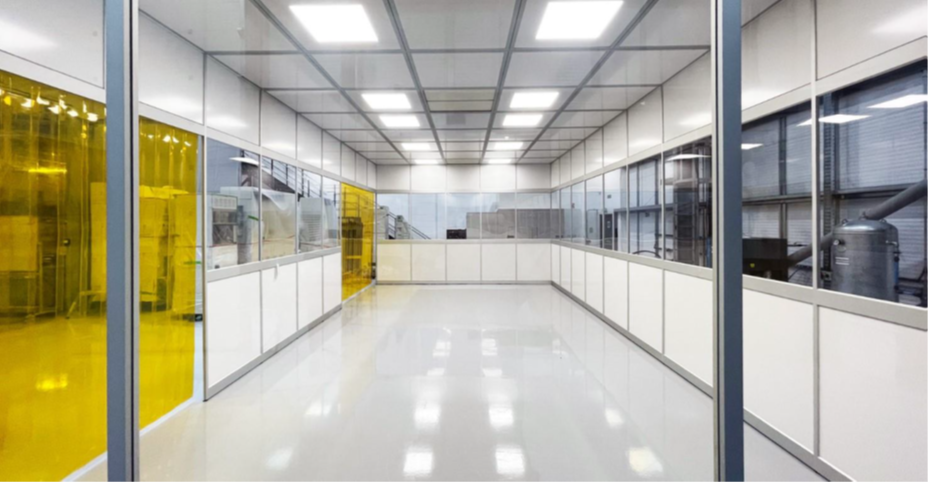
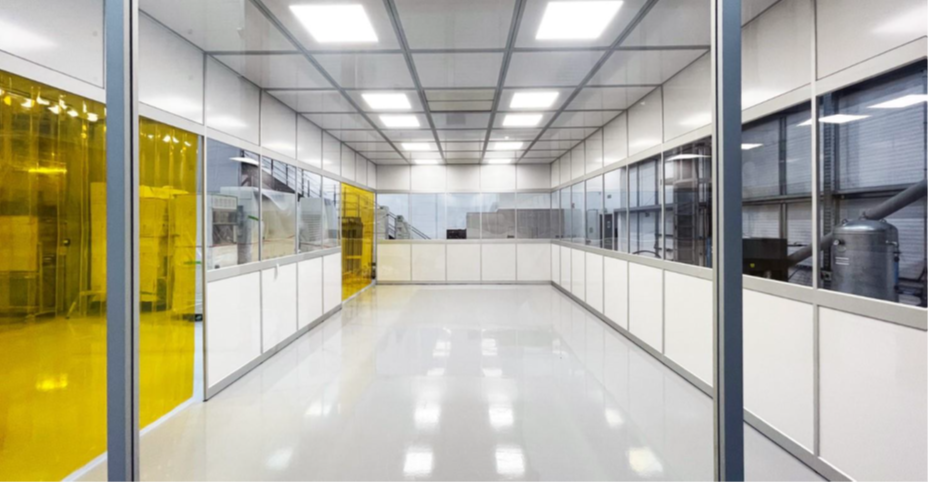
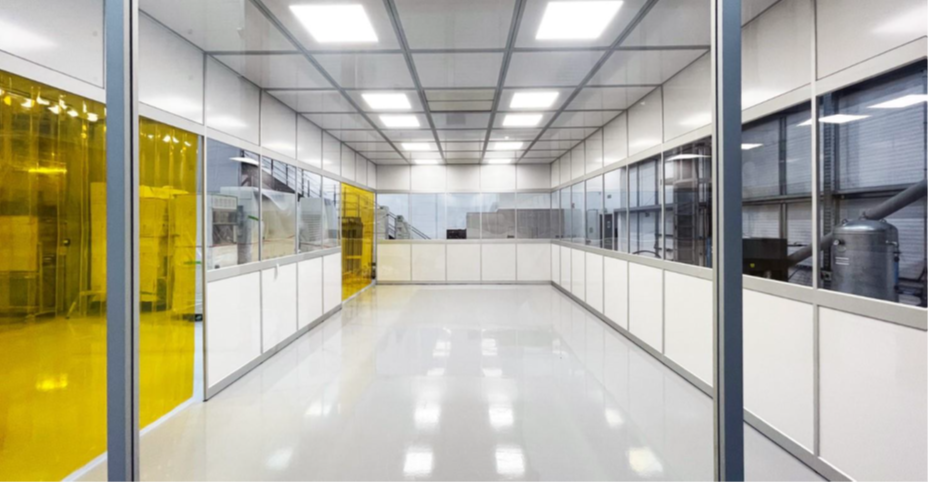
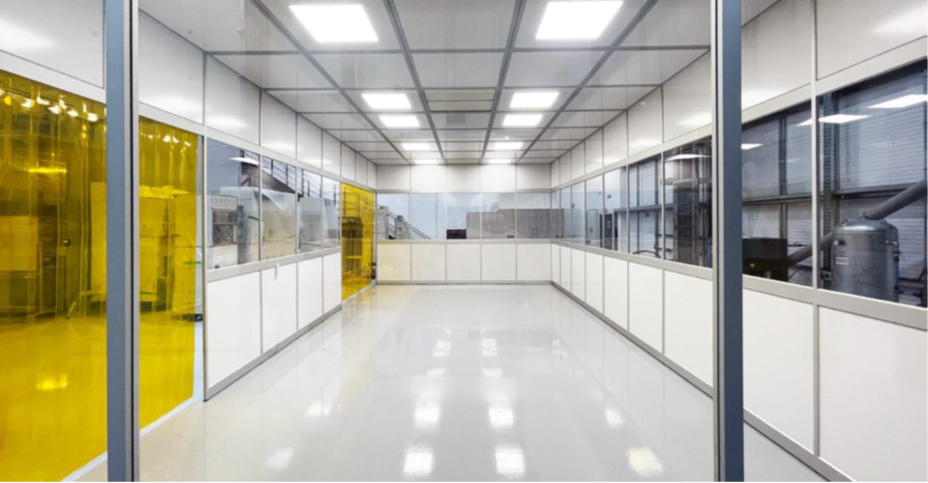
Facility-scale ISO 8 build, scoped to your floor plan
Multi-zone builds, mixed ISO 7 and ISO 8 areas under one roof, integrated HVAC, material transfer airlocks, and the gowning and staging rooms around a higher-grade suite. Engineered to your floor plan, validated to ISO 14644-1, IQ/OQ documentation included. Lead times typically 8 to 14 weeks depending on scope. Send us your scope and we will quote within a working week.
Request a scoping call →Related cleanroom pages
Scope an ISO 8 cleanroom for your facility
Tell us your floor area and the process you're protecting. We'll come back with the right Monmouth Cleanroom Kit, or a scoped multi-zone build, within a working week.
Common questions about ISO 8 cleanrooms
ISO 8 allows a maximum of 3,520,000 particles per cubic metre at 0.5 microns and larger, in the operational state, per ISO 14644-1:2015. Limits also apply at 1.0 and 5.0 microns (832,000 and 29,300 per cubic metre). The room is measured in operation, with people working and equipment running.
Yes. ISO 8 is the direct replacement for the older Federal Standard 209E Class 100,000 designation. Federal Standard 209E was retired in 2001 in favour of ISO 14644-1. The cleanliness levels are equivalent for practical purposes, though ISO 14644-1 specifies the particle measurement protocol more precisely.
ISO 7 allows 352,000 particles per cubic metre at 0.5 microns; ISO 8 allows 3,520,000, ten times more. ISO 7 runs at 25 to 60 air changes per hour, ISO 8 at 10 to 25. ISO 7 suits sterile fill and critical assembly; ISO 8 suits non-critical prep, packaging, and general assembly. ISO 8 is cheaper to build and run, so the right choice is the loosest class your process can hold.
Industry guidance is 10 to 25 air changes per hour for ISO 8, set by heat load, headcount, and process activity. Most Monmouth ISO 8 installations start around 15 to 20 air changes per hour, tuned during commissioning to hold the particle count with a safety margin. That is roughly half the air movement an ISO 7 room needs, which is where the running-cost saving comes from.
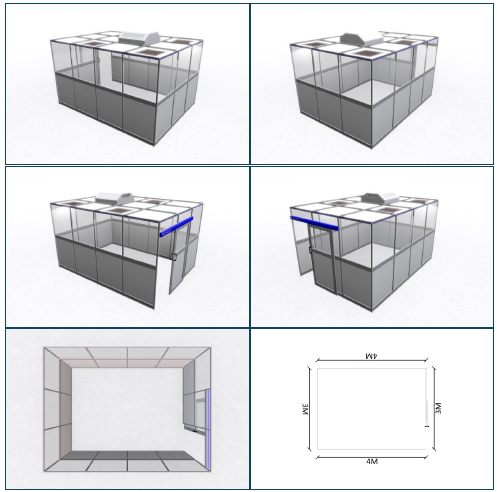
A Monmouth Cleanroom Kit starts at £17,560 ex VAT for 12m² and rises to £24,800 ex VAT for 25m². The kit envelope is the same across ISO classes, so the kit price holds whether you target ISO 8 or ISO 7. Facility-scale builds are quoted to scope, typically £40,000 to £500,000, where an ISO 8 target can lower the air-handling and filtration cost. Validation visits run £400 to £795 per visit.
A standard Monmouth Cleanroom Kit ships in 4 to 6 weeks from order and installs in 3 to 5 days on a prepared site. Facility-scale builds run 8 to 14 weeks from order to handover depending on scope. The fastest path is a kit on an existing concrete floor with three-phase power; services upgrades or multi-zone layouts add time.
ISO 8 in operation corresponds to EU GMP Grade C; ISO 8 at rest corresponds to Grade D. Grade C and D cover non-sterile manufacturing, preparation, and support areas under GMP Annex 1. If your work is GMP-graded, the GMP cleanroom page sets out how the grades and ISO classes map.
No. PackSealer supplies Monmouth cleanrooms for purchase only. For short-term project work or interim capacity, ask us about clean tents and flexible clean canopies as a lower-cost option. For permanent ISO 8 capacity, a Cleanroom Kit or scoped build is the right route and typically pays back faster than rental over a 12-month horizon.
Not sure which class your process needs? Our free assessment maps you to ISO 6, 7, or 8 in two minutes.
Find My Cleanroom ClassGet an ISO 8 cleanroom quote from PackSealer
Monmouth Scientific modular ISO 8 cleanrooms. UK-designed, validated to ISO 14644-1, supplied as kits from £17,560 or scoped as a multi-zone facility. Send us your floor plan and the process you're protecting, and we will come back within a working week.
View Cleanroom Range → Or call: 0121 704 0294 (Mon–Fri, 9am–5pm)