
Heat Sealer for Coffee Bags
Heat Sealer for Coffee Bags
A heat sealer for coffee bags needs to match the pouch material you use. Foil laminate coffee pouches need constant heat from a crimp sealer. Polythene-lined bags seal with a standard impulse sealer. Choosing the wrong type means failed seals, lost freshness, and wasted stock.

Crimp sealers versus impulse sealers for coffee pouches
The type of heat sealer you need depends entirely on the pouch material. Most speciality coffee roasters use foil laminate pouches with a degassing valve. These pouches have multiple layers — typically an outer printed film, a foil barrier layer, and an inner sealant layer. An impulse sealer will not produce a reliable seal on this construction because it heats for a fraction of a second and then cools. Foil laminates need sustained, controlled heat to fuse properly.
A constant-heat crimp sealer like the Hulme Martin HM 305 CTD is designed specifically for this job. Both jaws are heated, the temperature is electronically controlled up to 180°C, and the 12mm crimp seal provides the structural integrity that foil pouches demand. If you are sealing gusseted coffee bags with a valve, this is the machine to use.
For roasters using polythene-lined bags — common for ground coffee or filter bags without a foil layer — a standard impulse sealer handles the job well. The 300mm Hand Impulse Sealer seals polythene up to 600 gauge and costs under £100. It is the practical entry point for small-batch roasters packing 50 to 200 bags a day. If you also seal other food products, the same machine covers both.

Valve bags, degassing, and keeping coffee fresh
Freshly roasted coffee releases CO2 for up to 72 hours after roasting. If you seal a bag too soon without a one-way degassing valve, the gas pressure can burst the seal or bloat the pouch. Most speciality roasters use pre-made valve bags that let gas escape without letting oxygen in.
The seal itself is the weak point. A poor seal lets oxygen reach the beans, and stale coffee follows within days. The HM 305 CTD produces a 12mm crimp seal that withstands the internal pressure from degassing. For roasters packing within 24 hours of roasting, this seal width is not optional — it is a requirement.
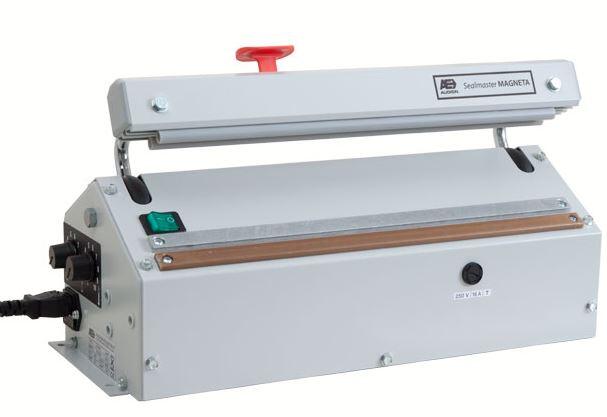
If you batch-roast and rest your beans for 48 hours before packing, the degassing pressure drops and a standard 3mm impulse seal can hold. The Audion Magneta 421 MG handles polythene and thin laminates at 420mm seal length, which covers most coffee pouch sizes. Its magnetic closure gives a consistent seal every time. Businesses also sealing bakery products can use the same Magneta for both.
Which sealer for which coffee pouch
The table below matches common coffee bag materials to the right sealer type. If you are unsure about your pouch material, send us a sample and we will test it against our machines.
| Pouch material | Sealer type | Seal width | Recommended machine |
|---|---|---|---|
| Foil laminate (valve bags) | Constant heat / crimp | 12mm | HM 305 CTD (£1,080) |
| Kraft paper with foil lining | Constant heat / crimp | 12mm | HM 305 CTD (£1,080) |
| Polythene-lined bags | Impulse | 2–3mm | 300mm Hand Sealer (£99.99) |
| Thin laminate / PP | Impulse (magnetic) | 3mm | Magneta 421 MG (£945) |
Not sure which material your bags are? Call us on 0121 704 0294. We test sample bags against our machines daily and can confirm compatibility in minutes.
Temperature settings and seal quality for coffee packaging
Foil laminate coffee pouches typically need a sealing temperature between 140°C and 170°C. The exact setting depends on the laminate thickness and inner sealant layer. The HM 305 CTD has a digital temperature controller with readout, so you can dial in the precise temperature and lock it to prevent accidental changes during a production run.
For impulse sealers, the variable is time rather than temperature. The seal timer controls how long current flows through the element. Start with a low setting and increase until you get a clean, even seal without burn marks. The Magneta 421 has adjustable seal and cooling timers, which gives you fine control over the seal quality on different polythene weights.
If your seals are wrinkling, the temperature is too high or the dwell time too long. If bags are peeling open, increase heat or time. A clean seal should be smooth, even, and impossible to pull apart by hand.
Heat sealers for coffee bags


Replacement parts for the sealers we sell
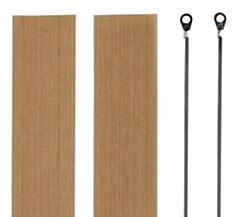
Element wire, PTFE tape, and foam pads for impulse sealers. Hulme Martin spares kits for crimp sealers. Most users replace consumables every 6–12 months of regular use. Order the spares kit with your machine so you are not waiting when production needs it.
Shop Spares Kits →What customers say
"They tested heat sealers on some sample bags I sent them to confirm suitability, even though the sale was relatively low value. Ultimately the unit I ended up purchasing was perfect for my needs."
"Wasn't sure which machine was most suitable for my requirements, phoned up and spoke to a very friendly and knowledgeable staff member. Ordered a machine based on their advice and it's just what I needed. Would highly recommend."
"I would like to thank the team Chris and Steve at Packsealer. I have been using their sealers for about 3 years and I find the customer service has been excellent if it is just to buy a replacement part or a video call they are always extremely pleasant professional and polite."
Common questions
Standard impulse sealers are not suitable for foil laminate coffee pouches. Foil laminates need constant, sustained heat to fuse the inner sealant layer properly. Use a constant-heat crimp sealer like the Hulme Martin HM 305 CTD, which heats both jaws to a controlled temperature up to 180°C.
For foil laminate valve bags, a 12mm crimp seal is recommended. This width provides the structural integrity to withstand CO2 pressure from freshly roasted beans degassing inside the sealed bag. For polythene-lined bags without a valve, a 2–3mm impulse seal is sufficient.
Foil laminate coffee pouches typically seal at 140–170°C depending on the laminate thickness. Start at 150°C and adjust until you get a clean, smooth seal with no wrinkling. The HM 305 CTD has a digital controller that displays both the set temperature and the actual jaw temperature.
Yes. Pre-made valve bags come with the valve already installed. You fill the bag with coffee and then seal the top using a crimp sealer or impulse sealer depending on the bag material. The valve is positioned away from the seal area, so it does not interfere with the sealing process.
We stock spare parts for every machine we sell. For impulse sealers, we carry element wires, PTFE tape, and complete spares kits. For Hulme Martin crimp sealers, we stock dedicated Hulme Martin spares kits. Stock items ship fast from our Solihull warehouse. Call 0121 704 0294 if you need help identifying the right parts.
Not sure which sealer is right? Our free assessment matches you in two minutes.
Find My MachineCoffee packaging
Coffee bags are foil laminates with a degassing valve, so they want a wider seal and longer dwell than a plain poly bag. Send us one of your bags. We will seal it on three machines and tell you which one holds.
Get a tailored quote from us
Tell us your volume and current setup. We'll match you to the right machine and reply within 24 hours. UK stock, real engineers, honest advice.
Find the right heat sealer for your coffee production
We stock crimp sealers for foil laminate pouches and impulse sealers for polythene-lined bags. UK stock, fast dispatch, and expert advice on 0121 704 0294.
View Coffee Bag Sealers → Or call: 0121 704 0294 (Mon–Fri, 9am–5pm)